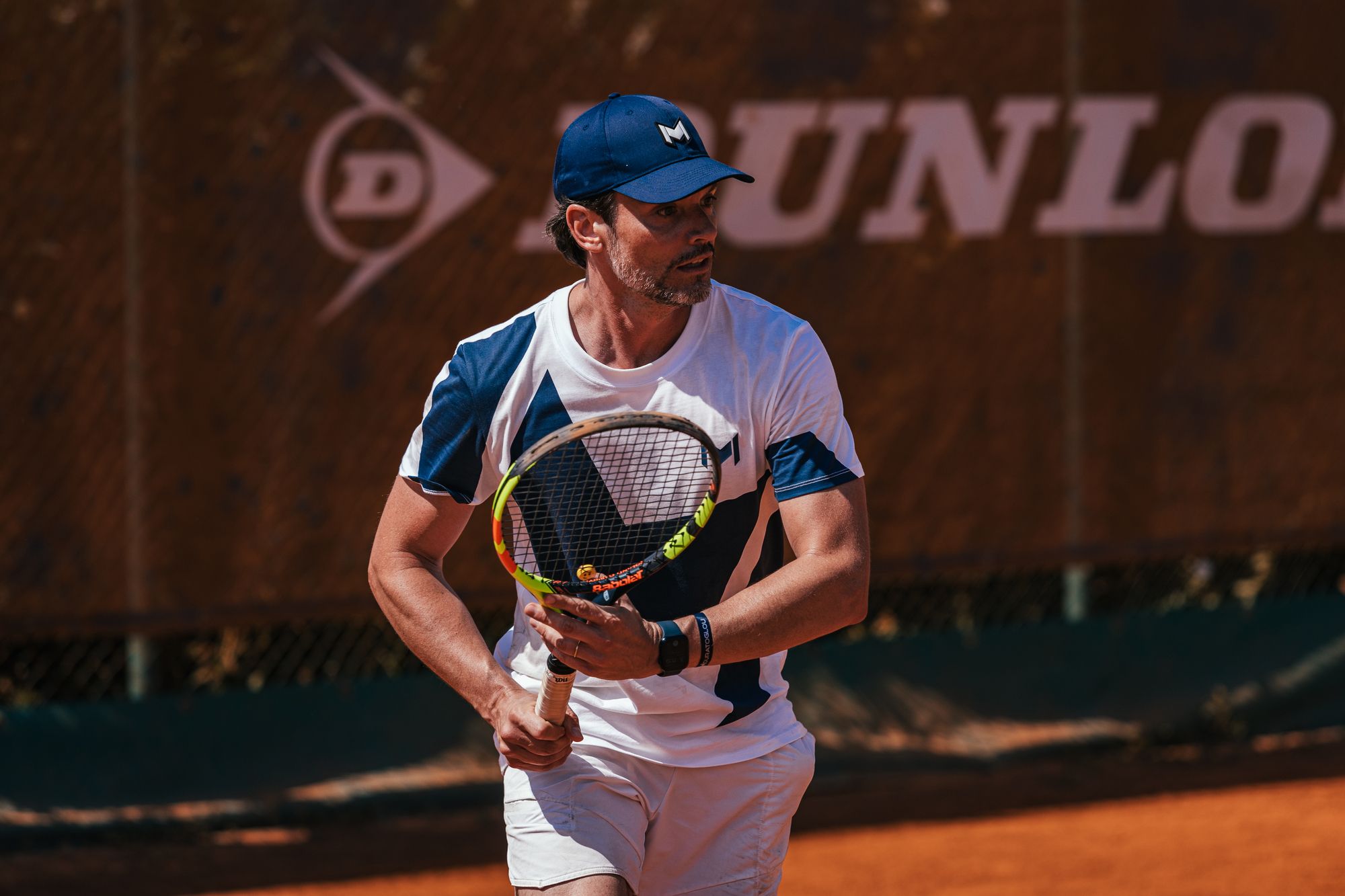
You may remember a great forehand more clearly than the practice it took to hit it. Returning means rediscovering ball contact, movement and match rhythm together. A long break does not prevent you from starting again, but the first visit need not be a test of your old standard.
Take stock before booking
How long have you been away? How active are you now? Do you want friendly games, a regular lesson or competition? Your answers help shape a suitable first session. Returning to recreational tennis is different from preparing a tournament comeback.
If an injury or health condition affects your options, clarify what needs adapting. Otherwise, give yourself permission to gather information rather than prove a level. The first session can simply show you what currently feels comfortable.
Find the ball again
Begin with shorter-distance rallies at a comfortable pace. Aim to send your partner a playable ball while staying balanced. Move farther apart as the rally becomes steady. A shared target, such as a short sequence of balls in court, can be more useful than competing from the first minute.
Then add some movement and simple serves without chasing maximum power. This is an example to adapt, not a fixed lesson plan. A coach can adjust the ball, distances and exercises to your starting point.
Choose a helpful partner
The best partner for a return is not necessarily the strongest player. Choose someone who understands the aim and accepts the pace. Agree to play centrally, slow things down or pause when needed. Explaining that you are returning avoids misunderstandings.
A coached session can also help refresh a stroke or identify one specific difficulty. Explore tennis in Biot and Sophia Antipolis and ask which format suits an adult coming back to the court.
Keep something in reserve
Choose a duration that lets you finish with controlled movements. Build one element at a time: time on court, movement or rally intensity. One comfortable session is not a reason to double the next. Notice how you recover before booking a demanding match.
Keep suitable general activity between court sessions. Our guide to rebuilding an exercise routine can help with the weekly plan. If another racket sport appeals, compare padel and tennis without assuming you must choose only one.
Bring scoring back gradually
Once rallies feel comfortable, try a few points with agreed conditions: an easy feed, a target area or a short sequence. Full matches can follow. Aim to leave wanting another game rather than judging the whole return by one result.
Sources and further reading
Explore the courts again
Visit the facilities and discuss ways to get back into the game.